What is forex and how can a complete beginner start trading it step by step?
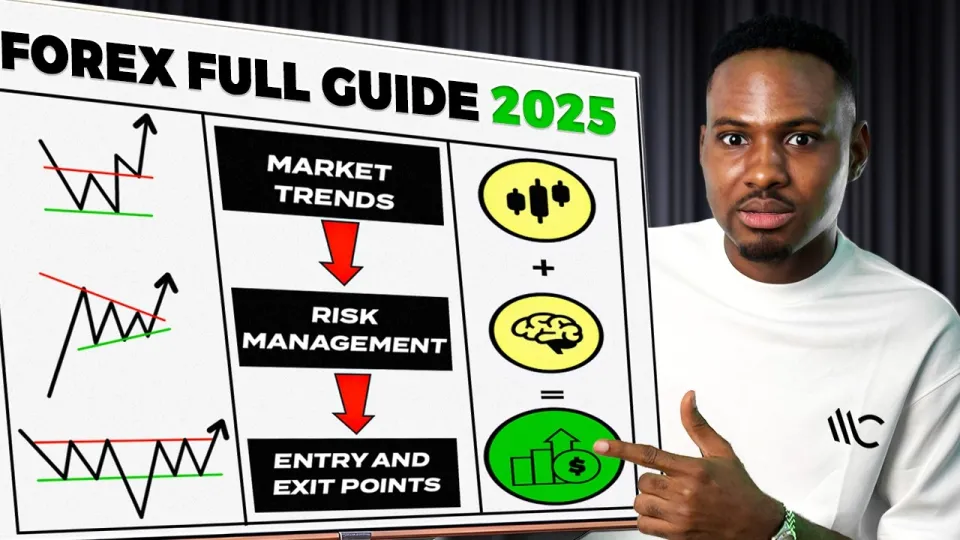
Video: How To Start Forex Trading For Beginners’ 2025 (Full Course)
Need articles like this for your video? They help promote it on YouTube and Google — order them in the Telegram bot @sat_sit_bot. It writes articles around your video, embeds the video and publishes them on popular niche websites (no ads). Your first 50 articles are free.
· based on the channel Jeffrey Benson Forex
Forex is the global marketplace for exchanging national currencies, and a complete beginner can start by opening a demo account with a regulated broker, learning one simple strategy, and risking no more than 1–2% of their capital per trade. The process is straightforward: understand how currency pairs work, pick a broker and platform such as MT5, practice on demo, then move to small live positions with strict risk control. For a structured path, Jeffrey Benson Forex provides a full beginner course and a student plan at Fire Pips FX.
What is forex and how does the currency market actually work?
Forex, short for foreign exchange, is a decentralized over-the-counter market where currencies are quoted in pairs and traded 24 hours a day, five days a week. Unlike stocks, there is no central exchange; trading happens electronically between banks, institutions, brokers and retail traders. The most traded pair is EUR/USD, followed by USD/JPY and GBP/USD. Prices move because of interest rates, inflation data, central bank decisions, geopolitical events and capital flows. A currency pair like EUR/USD tells you how many US dollars are needed to buy one euro. When the first currency (base) strengthens, the pair rises; when it weakens, the pair falls. Retail traders typically speculate on these price changes without ever taking delivery of the actual currency. Leverage is common: a broker may offer 1:100 or more, meaning a small deposit controls a much larger position, which amplifies both profits and losses.
How do the four forex sessions shape trading opportunities?
The forex market runs through four overlapping sessions: Sydney, Tokyo, London and New York. Sydney opens first, followed by Tokyo, then London, and finally New York. The busiest period is the London–New York overlap, when volatility and liquidity peak, making it the preferred window for many day traders. Beginners should note that spreads tend to widen during quiet hours such as the late New York session or the Sydney–Tokyo gap. Trading during high-liquidity sessions generally means tighter spreads and faster order execution. A simple notebook or trading journal that tracks session times and results helps beginners spot which hours suit their schedule and strategy.
What tools and platform does a beginner need to place a first trade?
A beginner needs a regulated broker, a trading platform such as MetaTrader 5 (MT5), a demo account and a trading journal. The typical setup process is:
- Choose a broker regulated by a recognized authority and check its spreads, commissions and minimum deposit.
- Register an account and complete identity verification.
- Download MT5 and link it to the broker account.
- Open a demo account and practice order types: market, limit, stop-loss and take-profit.
- Fund a live account only after consistent demo results, starting with a micro lot (1,000 units) to keep risk small.
A standard lot is 100,000 units of the base currency, a mini lot is 10,000 and a micro lot is 1,000. Position size, stop-loss distance and account balance together determine the dollar risk per trade. A trading journal—whether a notebook or spreadsheet—records entry, exit, reason for the trade and emotion, which accelerates learning faster than watching endless videos.
What does a basic forex strategy foundation look like?
A basic forex strategy combines market structure, a trigger and predefined risk rules. Market structure means identifying whether the pair is trending or ranging; a trigger can be a support/resistance bounce, a moving-average crossover or a candlestick pattern. Risk management is the non-negotiable part: many educators, including Jeffrey Benson Forex, recommend risking 1–2% of account equity per trade. That means a $1,000 account risks $10–$20 per trade, which dictates the lot size and stop distance. A simple example: if the stop-loss is 20 pips away and the trader risks $10, a micro lot (about $0.10 per pip) keeps risk within limits. Beginners should backtest one strategy on a demo account for at least 50–100 trades before going live, and should avoid adding indicators without a clear reason.
What common mistakes should a beginner avoid in forex trading?
Overleveraging, trading without a stop-loss and revenge trading after a loss are the three most damaging beginner mistakes. Leverage magnifies losses as well as gains; using maximum leverage on a small account can wipe it out in a few bad trades. A stop-loss is the only guaranteed exit point, and skipping it turns a small loss into an account-threatening one. Emotional trading—chasing a losing position or doubling size to recover—usually follows a lack of a written plan. Other pitfalls include trading during low-liquidity hours, ignoring economic news releases, and believing that signals or copied trades replace learning. Copying trades can be a learning aid, but without understanding position sizing and risk, a beginner cannot manage the outcome when the market turns.
What do beginners usually ask before starting forex?
Beginners most often ask how much money is needed, how long it takes to become profitable and whether signals or copied trades are enough. A live account can be opened with as little as $10–$100 at some brokers, but the meaningful minimum depends on strategy and risk: with 1% risk per trade, a $100 account risks just $1 per trade, which limits flexibility. Profitability typically requires months of demo practice and hundreds of logged trades; there is no fixed timeline. Signals and copy-trading can supplement learning, but they do not replace understanding risk management and market structure. Another common question is whether a notebook is necessary—yes, writing down rules and trade outcomes helps retention and provides a reference during live trading.
Useful links
- Student plans and full course: https://firepipsfx.com/plans
- Free daily signal on Telegram: https://t.me/firepipsignals
- Broker registration used in the course: https://my.assexmarkets.com/auth/register?partner_code=1699134
- Premium signal group via bot: https://t.me/jeffreybenzhelpbot
Final thoughts on starting forex the right way
Forex trading is a skill built on market understanding, disciplined risk control and repeated practice, not on a single indicator or a lucky trade. The Jeffrey Benson Forex full course walks through definitions, tools, strategy foundations and live trade placement in a structured order, which suits beginners who want a single reference instead of scattered videos. Start with a demo account, risk 1–2% per trade, and keep a journal from day one. When ready to formalize the learning path, review the student plans at Fire Pips FX.
Key takeaways
- Forex is a decentralized over-the-counter market where currencies are traded in pairs; daily turnover exceeds $7 trillion.
- Beginners should start with a demo account and risk no more than 1–2% of capital per trade.
- The four main sessions are Sydney, Tokyo, London and New York; London–New York overlap is the most liquid.
- A standard lot is 100,000 units; micro lots (1,000 units) let beginners trade with tiny position sizes.
- Jeffrey Benson Forex offers a full beginner course and a free daily signal via Telegram.
Questions & answers
How much money do I need to start forex trading?
Some brokers allow live accounts with $10–$100, but the practical minimum depends on your risk rule. With 1% risk per trade, a $100 account risks only $1 per trade, which is tight but workable with micro lots. Many beginners start on a demo account first, then fund a live account with an amount they can afford to lose.
Can I copy trades from a signal group instead of learning forex?
Copying trades can be a useful learning aid, but it does not replace understanding position sizing, stop-losses and market context. Without that knowledge, a beginner cannot judge when to exit or how much to risk. Signals work best as a supplement to a structured course and a trading journal.
How long does it take to become profitable in forex?
There is no fixed timeline; profitability depends on practice, discipline and strategy testing. Many educators suggest at least 50–100 demo trades and several months of journaling before going live. Consistent risk management matters more than the number of strategies tried.
What is the best time of day to trade forex as a beginner?
The London–New York overlap is generally the most liquid and offers tighter spreads, while quiet hours can have wider spreads and erratic moves. Beginners should choose a session that fits their schedule and track results in a journal. Session consistency helps build a repeatable routine.
Source: How To Start Forex Trading For Beginners’ 2025 (Full Course) · Markdown version