Which Crypto Coins Are Best Positioned to Explode: Solana, Near Protocol and Hyperliquid Compared
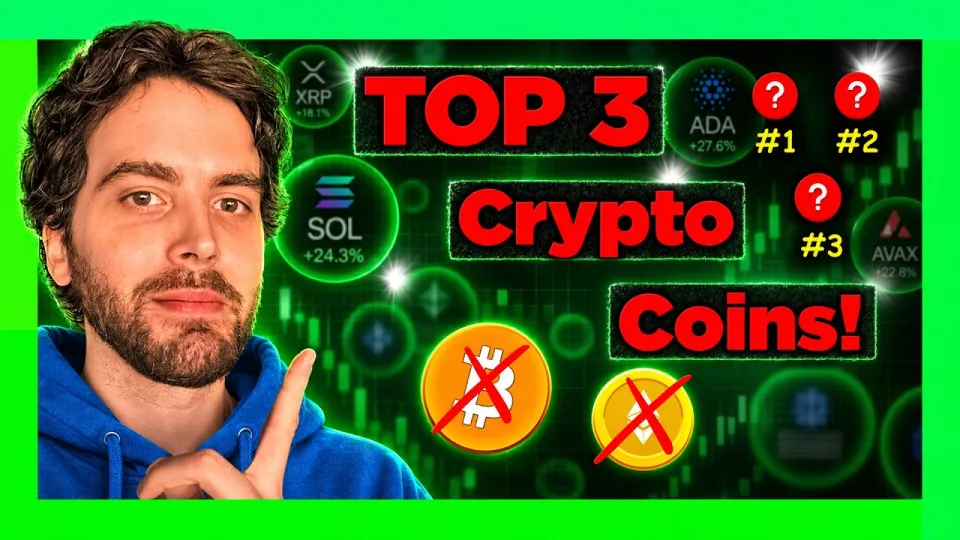
Video: These 3 Crypto Coins Are Getting Ready To EXPLODE!?
Need articles like this for your video? They help promote it on YouTube and Google — order them in the Telegram bot @sat_sit_bot. It writes articles around your video, embeds the video and publishes them on popular niche websites (no ads). Your first 50 articles are free.
· based on the channel Altcoin Daily
Crypto traders looking for the next breakout usually end up comparing a large-cap chain with a smaller momentum token and a DeFi venue, and that is exactly the split in Altcoin Daily's breakdown of three coins getting ready to explode: Solana (SOL), Near Protocol (NEAR) and Hyperliquid (HYPE). The short answer is that Solana carries the strongest liquidity and ecosystem case, Near Protocol carries the highest momentum and risk, and Hyperliquid is a bet on perpetuals volume rather than on a general-purpose chain. The channel's own hub, where the host posts daily market threads and coin breakdowns, is Altcoin Daily on X.
What the three crypto picks have in common
The common thread is that all three sit where retail activity and fee revenue meet, which is why they show up on breakout lists rather than pure infrastructure lists. Solana is the high-throughput layer-1 that hosts most of the memecoin and consumer-app traffic; Near Protocol is the sharded proof-of-stake chain pushing AI-adjacent and consumer narratives; Hyperliquid is an on-chain perpetuals exchange with its own token and order-book model. Each one has a live product that generates usage today, not a roadmap promise, and each one has a liquid spot market where a breakout can actually be expressed. That combination — real usage plus deep enough order books — is what separates a tradable breakout candidate from a narrative-only token.
The video's framing also leans on rotation: capital moving out of Bitcoin and large-cap majors into assets with higher beta. In that setup, the three names play different roles. Solana is the beta leader among majors, Near is the smaller-cap catch-up trade, and Hyperliquid is the picks-and-shovels play on leveraged trading demand.
Solana as the blue-chip altcoin
Solana's case rests on being the default venue for high-frequency on-chain activity, and the video treats it as the safest of the three candidates rather than the most explosive. The chain's low fees and fast finality keep memecoin launches, DeFi and consumer apps on one network, and that activity feeds fee revenue and validator demand. Backpack, the wallet and exchange built around Solana, is repeatedly raised as a distribution channel that pulls new users straight into the ecosystem, and the SOL meme culture around the ticker keeps retail attention on the asset between major announcements.
What to watch for a confirmed breakout rather than a headline pump:
- Sustained daily active addresses and fee revenue, not a one-day spike.
- Total value locked recovering alongside price, which signals real capital rather than leverage.
- New listings and app launches on Backpack and other Solana-native venues.
- SOL holding above its prior range high on a weekly close.
Near Protocol and the momentum trade
Near Protocol is presented as the momentum name, the one where a relatively small inflow can move price the fastest. Near's pitch is sharding for scalability plus a consumer and AI-flavored narrative, and its history includes a large run during the last cycle that still shapes how traders price it. The bullish argument in the video is straightforward: Near has real technology, a low unit price that attracts retail size, and a narrative that can be refreshed quickly with partnerships.
The counterweight is equally straightforward. A low unit price is not a low valuation, and momentum names give back gains faster than they make them. The most aggressive target floating around the community is $15 per coin this cycle, which is a useful marker of sentiment but should be treated as a scenario, not a forecast. Anyone sizing a Near position should decide in advance what invalidates the thesis — a loss of the range low, a stall in developer activity, or a broader altcoin drawdown — and size accordingly.
Hyperliquid versus Arbitrum on fees and liquidity
Hyperliquid's investment case is that perpetual futures volume keeps migrating on-chain, and the venue captures fees from that flow rather than from generic smart-contract activity. The token ties holders to the exchange's growth, so the breakout thesis depends on trading volume and open interest, not on a broad altcoin rally. That makes it a different kind of bet: if leveraged trading stays hot, Hyperliquid earns; if volatility collapses, the venue's revenue collapses with it.
The most common pushback is cost. Arbitrum users point out that gas on Arbitrum is cheaper than what they pay interacting with Hyperliquid, and for simple transfers or small DeFi positions that is a fair criticism. The counterargument is that Hyperliquid competes on execution quality and order-book depth for perps, where a fraction of a cent in gas matters far less than slippage on a leveraged position. In practice the two are not substitutes: Arbitrum is general-purpose infrastructure, Hyperliquid is a trading venue.
Questions and doubts traders raise about these crypto picks
The recurring doubts are about timing, competition and whether a familiar name can still deliver outsized returns. Several viewers note that October has repeatedly failed to produce the expected "Uptober" rally, which is a reminder that seasonal patterns are not a strategy. Others argue that Zcash or Midnight could outperform Near on privacy and compliance narratives, and that Solana's size now limits how far it can multiply. There is also a camp that prefers older or lower-profile tokens — Concordium, Bittensor, Sonic — and asks whether the host is still positive on them.
The honest way to handle these questions is to separate the asset from the trade. A chain can have a strong long-term case and still be a poor entry after a 50% run; a smaller token can have a weak fundamental case and still double on a single listing. Position sizing, invalidation levels and a clear exit plan matter more than which of the three names tops the list.
How to compare the three before buying
A practical comparison comes down to three measurable inputs: liquidity, revenue and narrative freshness. Solana scores highest on liquidity and ecosystem breadth, which lowers slippage and makes it the easiest to exit. Hyperliquid scores highest on revenue purity, because its fees come directly from trading activity. Near scores highest on narrative upside per dollar of inflow, which is exactly why it is the most volatile of the three.
A simple checklist before allocating:
- Check 24-hour volume and order-book depth on the venue you actually use.
- Compare fee revenue trends over the last 30 days, not just price.
- Decide the maximum position size you can hold through a 40% drawdown.
- Set a written invalidation level for each position before entering.
Links from the video
- Altcoin Daily on X — the channel's daily market threads and coin breakdowns.
- WEEX welcome bonus — 50% deposit bonus on the first $100, with the referral code included in the link.
Bottom line on the crypto breakout candidates
Altcoin Daily's breakdown gives a usable framework rather than a single answer: Solana for liquidity and ecosystem strength, Near Protocol for high-beta momentum, and Hyperliquid for exposure to on-chain perpetuals volume. Each one needs a different risk budget, and the $15 Near target should be treated as sentiment rather than a promise. The channel's own take is that all three have live catalysts heading into the next leg, and the Altcoin Daily X account is where those updates land first. Treat the list as a starting point for your own research, size positions so a failed breakout does not end your cycle, and remember that the loudest target in a comment section is rarely the most reliable one.
Key takeaways
- Altcoin Daily's breakdown frames three names as breakout candidates: Solana, Near Protocol and Hyperliquid.
- Solana is treated as the blue-chip altcoin, with Backpack and the SOL meme culture cited as demand drivers.
- Near Protocol is the momentum play in the video, with commenters floating a $15-per-coin target for the cycle.
- Hyperliquid is pitched as a perpetuals venue, while Arbitrum backers argue it is cheaper for gas fees.
- The video points viewers to Altcoin Daily on X and to a WEEX welcome bonus for the first $100 deposit.
Questions & answers
Is Solana still a good crypto buy compared with smaller altcoins?
Solana offers the deepest liquidity and the broadest live ecosystem of the three names discussed, which makes it the lower-volatility option rather than the highest-upside one. Its size means percentage gains are likely to be smaller than a small-cap momentum trade, but exits are easier and slippage is lower. Size it as a core position, not as a lottery ticket.
Why do some traders say Arbitrum is cheaper than Hyperliquid?
Arbitrum's gas fees for simple transfers and small DeFi interactions are typically lower than the cost of using Hyperliquid, which is a fair point for everyday on-chain activity. Hyperliquid competes on order-book depth and execution for perpetual futures, where slippage usually outweighs gas costs. The two serve different purposes rather than competing directly.
Can Near Protocol really reach $15 this cycle?
A $15 target is a sentiment marker circulating in the community, not a forecast backed by the video's analysis. Reaching it would require a large inflow into a mid-cap asset plus a refreshed narrative, and momentum trades of that kind can reverse quickly. Treat it as one scenario and define in advance what would invalidate your position.
Does the October "Uptober" pattern still work for crypto?
Seasonal labels are not a strategy, and repeated years of expected October rallies that failed to materialize show why. Price direction depends on liquidity, ETF flows and positioning far more than on the calendar month. Use seasonality as context at most, and rely on volume, fee revenue and invalidation levels for decisions.
Source: These 3 Crypto Coins Are Getting Ready To EXPLODE!? · Markdown version